AC Unit Replacement Cost in 2026: Tonnage, SEER, and the Three Add-Ons Rarely in the Headline Quote
Quick answer: Replacing a residential AC unit in 2026 runs roughly $4,200 to $10,500 installed depending on tonnage and SEER tier, with most single-family homes landing in the $5,500 to $11,500 range once add-ons are counted. Three categories rarely in the headline quote account for an 18 to 32 percent gap to the final invoice: refrigerant line set replacement, electrical service work, and ductwork plus code compliance.
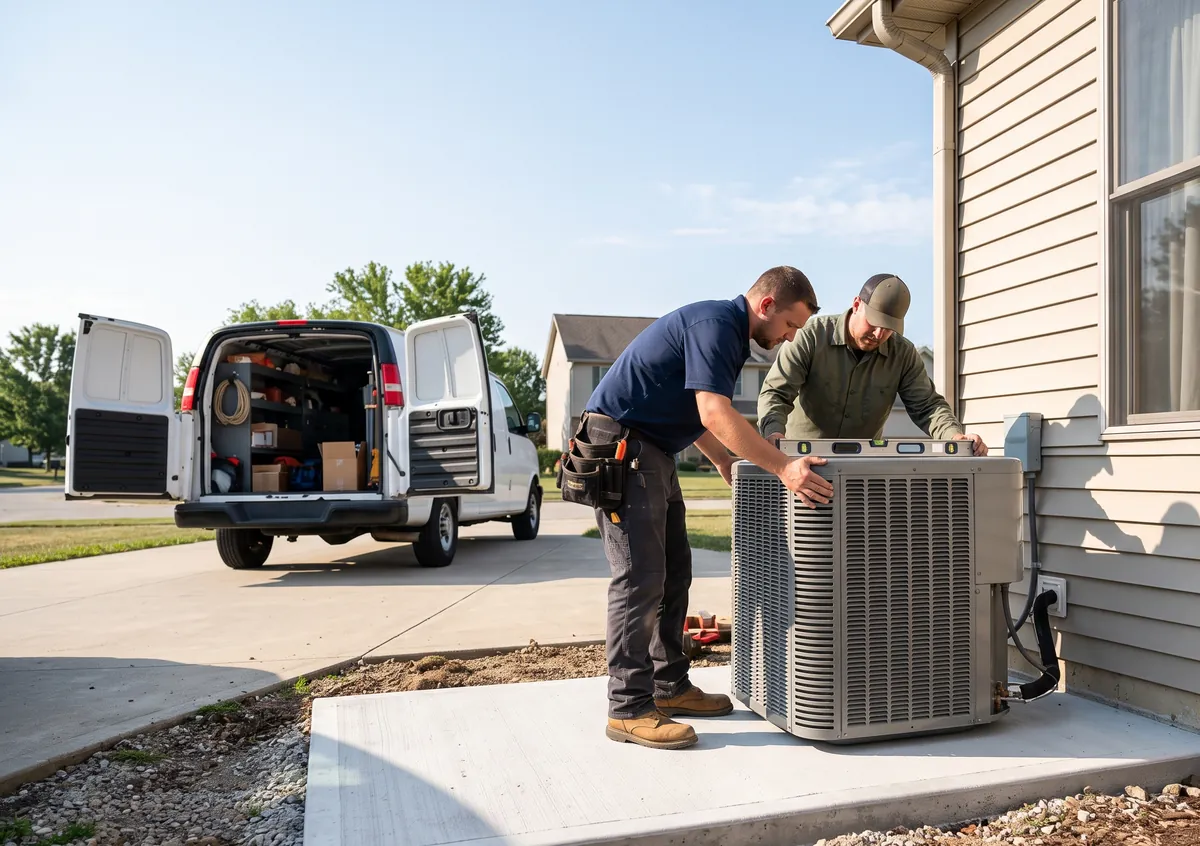
The headline quote for an AC unit replacement and the final invoice rarely match. The gap is not always dishonesty. Sometimes it is. More often it is the three categories of work that show up only after the contractor opens the access panels or the install is partway done. Homeowners who understand those categories before signing the quote can either negotiate them in or refuse the change orders later with a paper trail.
This is what AC unit replacement actually costs in 2026, broken out by tonnage and SEER tier, with the three add-ons that account for the 18 to 32 percent gap between the headline number and the final invoice.
The honest cost range in 2026
| System size or add-on | 2026 installed cost (14.3 SEER2 baseline) | What moves the number |
|---|---|---|
| 1.5 ton (small condo, ~600-1,000 sq ft) | $4,200 to $5,800 | Closet vs attic access, line-set length |
| 2 ton (1,000-1,400 sq ft) | $4,800 to $6,400 | Tonnage, regional labor rate |
| 2.5 ton (1,300-1,800 sq ft) | $5,400 to $7,100 | Tonnage, brand tier |
| 3 ton (1,700-2,200 sq ft) | $6,000 to $7,800 | Most common single-family size |
| 3.5 ton (2,000-2,600 sq ft) | $6,500 to $8,400 | Tonnage, ductwork match |
| 4 ton (2,400-3,000 sq ft) | $7,200 to $9,200 | Tonnage, electrical load |
| 5 ton (2,800-3,500 sq ft) | $8,000 to $10,500 | Largest residential size |
| Efficiency upgrade 14.3 to 16 SEER2 | add $400 to $900 | May qualify for federal credit |
| Efficiency upgrade 14.3 to 18 SEER2 | add $1,200 to $2,400 | Payback depends on climate, stay length |
| Variable-speed inverter (20+ SEER2) | add $2,400 to $4,800 | Best payback in hot climates, long stays |
| Add-on: refrigerant line set replacement | add $400 to $1,200 | Required on R-22 to R-410A/R-454B swaps |
| Add-on: electrical (disconnect to panel upgrade) | add $180 to $3,500 | Panel upgrade is the big surprise |
| Add-on: ductwork plus code compliance | add $300 to $4,500 | Sealing only at low end, reconfiguration at high |
*Installed-cost ranges reflect 2026 U.S. contractor pricing; SEER2 minimums and efficiency-tax-credit context per the U.S. Department of Energy and ENERGY STAR. Market ranges cross-checked against 2026 cost surveys from HomeGuide and Angi. Prices vary widely by region and home; confirm current pricing with itemized local quotes.
The 2026 cost ranges for AC unit replacement on residential single-family homes with existing ductwork:
- 1.5 ton (small condo or apartment-conversion), 14 SEER: $4,200 to $5,800 installed
- 2 ton (1,000 to 1,400 square feet), 14 SEER: $4,800 to $6,400 installed
- 2.5 ton (1,300 to 1,800 square feet), 14 SEER: $5,400 to $7,100 installed
- 3 ton (1,700 to 2,200 square feet), 14 SEER: $6,000 to $7,800 installed
- 3.5 ton (2,000 to 2,600 square feet), 14 SEER: $6,500 to $8,400 installed
- 4 ton (2,400 to 3,000 square feet), 14 SEER: $7,200 to $9,200 installed
- 5 ton (2,800 to 3,500 square feet), 14 SEER: $8,000 to $10,500 installed
The SEER tier adjustments:
- 14 to 16 SEER: add $400 to $900
- 14 to 18 SEER: add $1,200 to $2,400
- 14 to 20+ SEER (variable speed inverter): add $2,400 to $4,800
Premium brands (Carrier, Trane, Lennox) typically add $800 to $1,800 over the equivalent Goodman or Amana installation. Whether the premium is worth it depends on the contractor's installer quality more than the brand itself. A poorly installed Carrier system performs worse than a well-installed Goodman.
The three add-ons rarely in the headline quote
Add-on one: refrigerant line set replacement
The line set is the pair of copper tubes that carry refrigerant between the indoor coil and the outdoor unit. Existing line sets can sometimes be reused. When they cannot, the cost adds $400 to $1,200 depending on length, complexity, and whether the run requires drilling through walls or ceilings.
The line set must be replaced when:
- The existing line set was used with R-22 and the new system uses R-410A or R-454B (oil contamination from the old refrigerant degrades the new system)
- The line set is sized wrong for the new unit's tonnage (a 3 ton system on undersized 2 ton lines reduces capacity)
- The line set shows corrosion, kinks, or insulation damage
- The new equipment is in a different location than the old equipment
The honest quote either confirms line set reuse with a justification (visual inspection, leak test results, sizing verification) or includes line set replacement as a quoted line item. Quotes that say nothing about the line set are quotes where this becomes a $400 to $1,200 change order.
Add-on two: electrical service work
A new AC unit needs a properly sized circuit, an outdoor disconnect, and a panel that can support the load. Some homes have all of this in place from the previous unit. Many do not.
Common electrical add-ons in 2026:
- Disconnect replacement (existing disconnect is older code or damaged): $180 to $350
- New 30-amp or 50-amp circuit from panel to outdoor unit: $400 to $900
- Panel upgrade to accommodate higher-amperage unit: $1,800 to $3,500
- Whole-home surge protector at panel: $250 to $450 (recommended on premium systems)
The panel upgrade is the largest of these and the one most likely to show up as a surprise. Older 100-amp panels often cannot accept a new 50-amp AC circuit without removing other loads. The upgrade to 200-amp service is significant work and should be quoted separately by a licensed electrician.
Add-on three: ductwork and code compliance
The existing ductwork was designed for the existing AC unit. Replacing the unit sometimes triggers ductwork rework, especially when:
- The new unit is a different size (different airflow requirement)
- The existing ducts are undersized for proper airflow (common in homes where the original AC was undersized for the structure)
- Building code requires updated duct sealing (mastic at all joints, R-8 insulation in unconditioned spaces)
- The existing return air is insufficient (typically 1 square inch of return for every 1 to 2 CFM of airflow)
Ductwork rework can range from $300 (sealing existing ducts) to $4,500 (major reconfiguration with new trunk lines). The honest contractor evaluates the ductwork during the quote phase and includes any needed work. The contractor who quotes the equipment and labor only, then discovers ductwork problems mid-installation, is the contractor who will produce a change order.
Code compliance is the third leg of this add-on. Building code updates frequently between residential mechanical permit cycles. A 14-year-old install met 2012 code. A 2026 replacement must meet 2024 or 2025 code in most jurisdictions. The updates typically include condensate handling, disconnect specifications, refrigerant line set insulation, and air handler platform requirements.
> Get itemized quotes that explicitly address line set, electrical, and ductwork conditions before signing. Local HVAC Advisor matches homeowners with licensed contractors who walk the installation site and document conditions before producing the quote.
The SEER decision in 2026
The Department of Energy raised minimum SEER ratings on January 1, 2023 (SEER 14 in the southern states, SEER 13 in the north has been replaced by SEER2 ratings, with most current units rated SEER2 14.3 minimum). Higher tiers (SEER2 16 and above) qualify for federal tax credits under the Inflation Reduction Act, up to $600 per year.
The 2026 SEER decision logic:
- Plan to stay in the home less than 5 years: SEER 14.3 (minimum). The efficiency premium does not pay back before selling.
- Plan to stay 5 to 10 years: SEER 16. The efficiency premium pays back in 5 to 7 years through electric bill savings.
- Plan to stay 10+ years and live in a hot climate: SEER 18 or variable-speed inverter. The efficiency premium pays back in 4 to 6 years and continues saving for the unit's remaining life.
The federal tax credit ($300 to $600 depending on equipment) plus state and utility rebates ($200 to $1,500 in various markets) shifts the math. A SEER 16 unit that costs $700 more than SEER 14 may net only $100 to $300 more after credits and rebates. Always verify current rebate availability before signing.
The financing markup
Most HVAC contractors offer financing through partners like Synchrony, GreenSky, or Service Finance. The financing structure is usually zero or low interest for 12 to 24 months, with deferred interest if not paid in full.
The contractor pays a 5 to 10 percent fee to the finance company and recovers it in the quote. A $7,500 cash quote may be presented as a $8,000 financed quote for the same work.
The cash discount, if asked for, runs 4 to 6 percent. On a $7,500 quote, that is $300 to $450 in real money. Worth asking.
The brand premium analysis
The premium-brand HVAC market (Carrier, Trane, Lennox) sells on perceived quality and reliability data. The mid-tier market (Goodman, Amana, Rheem) sells on price. The reliability data is mixed.
Consumer reports and industry maintenance data through 2025:
- Failure rate in years 1 to 5: premium brands 4 to 6 percent, mid-tier 5 to 8 percent
- Failure rate in years 6 to 10: premium brands 12 to 18 percent, mid-tier 15 to 22 percent
- Failure rate in years 11 to 15: premium brands 28 to 40 percent, mid-tier 32 to 45 percent
The premium brand advantage in reliability is real but smaller than the price premium suggests. A $1,500 brand premium for a 3 to 5 percentage point lower failure rate over 15 years is not always worth it.
Installation quality matters more than brand. A first-rate installer working with Goodman equipment produces better outcomes than a mediocre installer working with Carrier equipment. The brand on the unit is the marketing. The crew installing it is the system.
The warranty layer
Manufacturer warranties on residential AC units in 2026 typically run:
- 10 years on the compressor (with registration within 60 to 90 days)
- 10 years on parts (with registration)
- 1 year on labor (sometimes 2 years through specific dealers)
The labor warranty is the gap that hurts homeowners. A compressor failure in year 7 has the part covered under warranty, but the homeowner pays $800 to $1,500 in labor to install the replacement compressor. Some installers offer extended labor warranties (5 to 10 years) for an additional $400 to $900.
Third-party home warranty coverage typically caps at $1,500 to $3,000 per AC claim. A $3,000 compressor labor charge with a $1,500 cap leaves the homeowner $1,500 plus the service fee out of pocket. Caps are why the manufacturer's labor warranty extension can pay back.
> Register your new system with the manufacturer within 60 days of installation. Failure to register voids the extended parts warranty. Local HVAC Advisor connects homeowners with contractors who handle the registration paperwork as part of the install.
What the final invoice should show
For a complete AC unit replacement, the invoice should itemize:
- Equipment (condenser model, air handler / coil model, tonnage, SEER)
- Labor (hours and rate, or job-based fee)
- Refrigerant line set (reused or replaced, with reason)
- Electrical (disconnect, circuit, any panel work)
- Ductwork (if any rework was performed)
- Permit and code compliance
- Refrigerant recovery (old system)
- Disposal (old equipment haul-away)
- Warranty registration (manufacturer)
Total should match the agreed-on quote within $200 unless a documented change order was signed. Change orders that appear without prior written approval are disputable.
Frequently Asked Questions
How much does it cost to replace an AC unit in 2026?
By tonnage at the 14 SEER baseline, installed costs run from about $4,200 to $5,800 for a 1.5 ton unit up to $8,000 to $10,500 for a 5 ton unit, with the in-between sizes scaling accordingly. Once the three common add-ons are counted, most single-family replacements land in the $5,500 to $11,500 range. Higher SEER tiers add anywhere from $400 to $4,800 on top.
What add-ons are missing from the headline AC quote?
Three categories that surface after the panels come off or the install is partway done: refrigerant line set replacement ($400 to $1,200), electrical service work ($180 for a disconnect up to $3,500 for a panel upgrade), and ductwork plus code compliance ($300 to seal existing ducts up to $4,500 for major reconfiguration). Together they account for the 18 to 32 percent gap between the headline number and the final invoice.
Is a higher SEER AC unit worth it?
It depends on how long you will stay. Under 5 years, the SEER 14.3 minimum makes sense because the efficiency premium does not pay back before you sell. At 5 to 10 years, SEER 16 pays back in 5 to 7 years through bill savings. At 10-plus years in a hot climate, SEER 18 or a variable-speed inverter pays back in 4 to 6 years. SEER2 16 and above can also qualify for federal efficiency tax credits, which you can verify through ENERGY STAR's central AC guidance.
Are premium AC brands worth the extra cost?
The reliability edge for Carrier, Trane, and Lennox over mid-tier brands like Goodman or Amana is real but smaller than the price premium suggests, usually a 3 to 5 percentage point lower failure rate over 15 years for an $800 to $1,800 premium. Installation quality matters more than brand: a first-rate installer with Goodman equipment outperforms a mediocre installer with Carrier.
Why register a new AC unit with the manufacturer?
Most manufacturer warranties require registration within 60 to 90 days to keep the extended parts and compressor coverage (typically 10 years) in force. Miss the window and you can lose that coverage. Note that even with parts covered, the labor warranty usually runs only 1 year, so a year-7 compressor failure can still cost $800 to $1,500 in labor.
The closer
AC unit replacement is the second-largest mechanical purchase most homeowners make, after the home itself. The five-figure dollar range deserves the same scrutiny as any other five-figure purchase. The three add-ons (line set, electrical, ductwork and code) account for the difference between the headline quote and the final invoice. The homeowner who insists on itemization addresses them before signing, not after.
The contractor who walks the install site, opens the panels, inspects the ductwork, and produces a quote that names line set condition, electrical adequacy, and code compliance is doing the work the homeowner is paying for. The contractor who hands over a one-page quote with a single bottom-line number is selling cheap and billing expensive.
> Get three written itemized quotes before signing. Local HVAC Advisor matches homeowners with licensed contractors in your zip code. The match is free. Comparison is the only protection on a five-figure decision.